

Syrian Christians for Peace calls for Unity and Justice March 29, 2026 Syrian Christians for Peace Calls for Unity and Justice Syrian Christians for Peace condemns in the strongest terms the latest wave of sectarian incidents and incitement in Syria. We call upon Syrians from all components to remain united and reject sectarianism and division, and we call upon the Syrian government to launch a serious national dialogue initiative and speed up the accountability and transitional justice process. We also encourage the Syrian authorities to issue the necessary legislations to criminalize sectarianism and hate speech and to provide for full political participation for all Syrians. منظمة سوريون مسيحيون من أجل السلام تدعو إلى ترسيخ الوحدة وتحقيق العدالة تعرب منظمة سوريون مسيحيون لأجل السلام عن إدانتها لموجة التحريض و الأحداث ذات الطبيعة الطائفية التي حدثت في مناطق مختلفة من بلادنا العزيزة سوريا. كما تدعو المنظمة السوريين بمختلف فئاتهم إلى التمسك بوحدتهم الوطنية ونبذ كل ما يدعو للتفرقة و الكراهية بين أبناء الوطن الواحد. كما تدعو المنظمة السلطات السورية إلى إطلاق عملية حوار وطني حقيقي و الإسراع في معالجة ملفات المحاسبة و العدالة الانتقالية و إصدار قوانين صارمة لتجريم خطاب الكراهية و التحريض إضافة إلى توسيع المشاركة السياسية و إصدار القوانين اللازمة لتنشيط العمل السياسي في سوريا.
Syrian Christians for Peace Participates in Launch of Syrian–Australian Chamber in Melbourne
The launch of the Syrian–Australian Chamber of Commerce and Industry in Melbourne marks a significant step toward strengthening economic ties between Syria and Australia, bringing together government representatives, business leaders, and members of the Syrian diaspora. At the heart of the event, “Syrian Christians for Peace” was represented by its Board Member, Mr. Johnny Abo, whose participation underscored the organization’s commitment to advancing economic cooperation, fostering community engagement, and promoting constructive dialogue among Syrians both at home and abroad. Mr. Abo, who also serves on the Chamber’s Board of Directors, emphasized the importance of such platforms in building strategic partnerships, encouraging investment, and reinforcing connections within the Syrian–Australian business community. Held under the patronage of the Syrian Ministry of Foreign Affairs, the event was attended by Australian officials and a diverse group of Syrian and Arab business leaders, reflecting a growing momentum toward establishing sustainable economic bridges between the two countries. The newly established Chamber is expected to play a pivotal role in expanding trade, facilitating investment opportunities, and providing a unifying platform for Syrian entrepreneurs and professionals in Australia.
Statement by Syrian Christians USA for Peace
In light of the recent events and the renewed tensions witnessed in several parts of Syria, Syrian Christians USA for Peace reaffirms its unwavering commitment to the unity of the Syrian people and the territorial unity and integrity of Syria. Any attempt to fragment Syria along sectarian or ethnic lines, whether through formal partition or de facto division, poses a grave threat not only to Syrian Christians but to the very fabric of Syrian society and its historic pluralism. Syria is a land of deep national, cultural, and religious interconnectedness. Syrian Christians, who have lived for centuries as an integral part of the country’s social and political life, reject narratives that seek to reduce Syria into isolated identity-based enclaves. Partition would only deepen insecurity, displace communities, weaken national cohesion, and place minorities at greater risk under sectarian or exclusionary governance models. We call for an inclusive Syrian national dialogue that meaningfully reflects the fears, aspirations, and lived realities of all Syrians. Such dialogue must aim to reduce polarization, address historical grievances, and build trust among communities that have suffered immeasurably over the past decades. Only through open, participatory, and Syrian-led engagement can the country move toward reconciliation and sustainable peace. Furthermore, we affirm that the shape, structure, and mandate of any new Syrian government must be determined by Syrians themselves — across all sects, ethnicities, and political backgrounds — and institutionalized through a democratic constitutional process. The legitimacy of the future state must derive from the will of the people, not external designs or imposed geopolitical calculations. Syrian Christians stand not for isolation but for unity; not for division but for coexistence; not for authoritarianism but for a pluralistic, free, and sovereign Syria where all citizens are equal under the law. The future of Syria lies in rebuilding a single, inclusive national identity that honors diversity while safeguarding shared belonging. We urge regional and international actors, including the United States and Arab neighbors, to support policies that reinforce Syria’s unity, promote genuine political transition, and enable Syrians to shape their own destiny free from fragmentation, fear, and sectarian rule. A united Syria is not merely a political imperative, it is the only path to lasting peace, dignity, and national restoration. November 28, 2025Washington D.C., United Stated of America
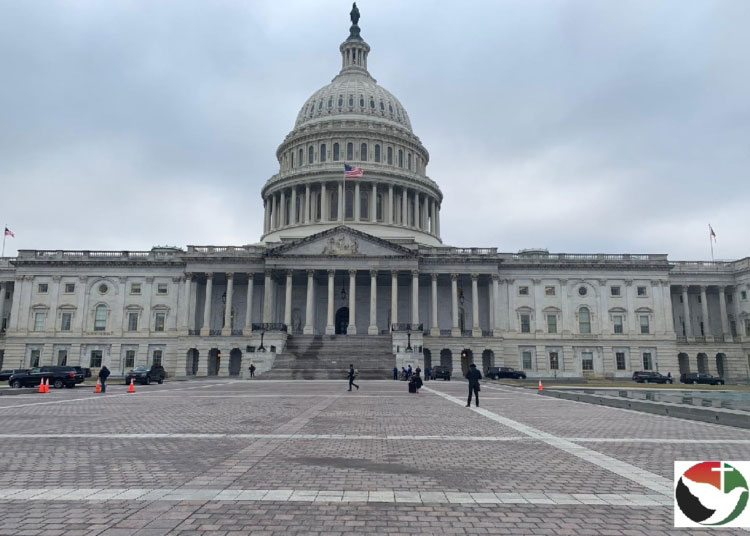
Syrian Christians Urge Congress to Repeal the Caesar Act
Syrian Christians for Peace USA stands with the Christian clergy in Syria, who sent an official letter to the U.S. Congress calling for the full repeal of the Caesar Act and its secondary sanctions.The letter highlights the devastating impact on Syrian communities especially Christians who face hardship, displacement, and the loss of essentials like electricity, healthcare, and education. “Justice cannot be built on sanctions that burden entire populations, but on opening doors of life and hope.” This moral and humanitarian appeal calls on U.S. lawmakers to respond with compassion and uphold the values of justice, peace, and human dignity.

Faith Leaders Appeal for Temporary Protected Status Extension for Syrians
Partition of Syria Poses Grave Implications to Syrian Christians
Bashar al-Assad’s brutal war against the Syrian people left the country in ruins. The interim government in Damascus is working to establish a new political framework and reestablish control of its borders. However, there are advocates calling for a U.S.-Syria policy with the objective of partitioning Syria into separate statelets based on ethnic and religious lines. Calls to partition Syria into ethnoreligious statelets pose a serious threat to the country’s Christian population. Once a thriving and integrated community, Syrian Christians now face displacement, marginalization, and the erosion of their cultural and religious identity. Partition would deepen their vulnerability by disrupting geographic cohesion, weakening political representation, and stripping away economic stability. Only a unified, pluralistic Syria can safeguard the rights and future of Christian communities—and all Syrians—while preserving the country’s diverse and inclusive national fabric. Historical Context Syria is the cradle of Christianity. It was on the road to Damascus that Saul encountered the risen Christ, and from that divine revelation, he became Paul—the apostle to the nations. From the ancient walls of Damascus, Paul embarked on a mission that would carry the message of Jesus Christ across the Roman world. Syria thus holds a sacred place in Christian history, not merely as a land of believers, but as the very cradle of Christian witness and apostolic mission. “Syrian Christians have a long and rich history in the region, with communities dating back to the early days of Christianity” Before the war in March 2011, Christians made up around 10% of Syria’s population and lived predominantly in urban areas across the country with obvious presence for them in the countryside. They enjoyed relative religious freedom and were active participants in the country’s political and social life. The war, however, has led to the displacement of many Christians, the destruction of their homes and churches, and the fragmentation of their communities. Implications of Partition The partitioning of Syria could significantly impact the Christian community, which is geographically widespread across all governorates and major cities. Unlike other ethnic or religious groups that are more concentrated in specific regions, Christians are integrated into many parts of the country, making them vulnerable to fragmentation or marginalization if the state is divided. This situation might threaten their safety, community cohesion, and religious freedoms, potentially leading to increased instability and displacement for Christian populations. Finally, if Syria were to be partitioned into ethnoreligious states—such as Druze, Arab Sunni, Kurdish Sunni, Alawite, and others—Christians would become increasingly vulnerable to the influence of identity-based regimes. Such fragmentation could lead to the rise of new, potentially less tolerant governments in each enclave, leaving Christian communities at heightened risk of discrimination. Christians may face severe restrictions on their religious practices, or even outright persecution. The lack of a unified government to protect their rights would leave them at the mercy of local authorities. The failure to establish a unified state has already had tragic consequences, as evidenced by the suffering endured by the Alawite community on the west coast and the Druze community in southern Syria. Therefore, the only viable path for the survival of Syrian Christians is a unified, diverse, and pluralistic Syria rooted in a shared national identity rather than ethnic or religious divisions. Displacement and Fragmentation The de facto partition of Syria since 2011 has already impacted the country’s Christian population, with unofficial estimates suggesting a decline of up to 5%. A formal partition would likely accelerate the displacement and fragmentation of Christian communities, further eroding their presence and identity in the country. Many Christians who were internally displaced are only now beginning to return to their ancestral homes. However, institutionalizing Syria’s division could trigger renewed displacement—forcing Christians to move to areas with which they have no historical or cultural connection, or to seek permanent refuge abroad. Such a scenario would deal a significant blow to Syria’s religious and cultural pluralism. This has ramifications for not just Christians but for all minorities wanting to rebuild their communities and be at peace with their neighbors. Syrians before the uprising against Assad, they were at peace with their neighbors. Assad weaponized Christians to the West as his defender when he cut down anyone of our faith who stood up against him. We paid the hard price as much as much as our Muslim brothers and sisters being needlessly being murder for no reason wanting freedom. Economic and Social Marginalization Additionally, the partitioning of the country would undermine their economic stability. Many Christians are landowners and business owners, often concentrated in their city or governorate of origin. Fragmentation or internal displacement would result in the loss of their assets and sources of income, forcing many to seek survival opportunities abroad, particularly in Europe, through migration. Partitioning Syria could also lead to political and social marginalization for Christians. As a minority group, they may find it very difficult to secure representation and resources in new statelets dominated by other ethnic or religious groups. This marginalization could further erode their social cohesion and economic stability, making it even harder for them to rebuild their lives. A Unified Syria First The partition of Syria is a dangerous solution for a post-Assad Syria. Such a U.S. policy stands in direct contrast to its aim of a stabilized Syria, recently hailing the agreement between the interim government and the Syrian Democratic Forces. “If America genuinely seeks to protect Syrian Christians and support a pluralistic future, it should lift sanctions that harm civilians and instead prioritize sustained diplomatic engagement with the interim government.” This approach would help ensure the adoption of democratic practices, the protection of civil liberties for all Syrians, and the development of a unified, institutionalized military and state capable of safeguarding national unity and minority rights. In parallel, the United States should support capacity-building efforts for the emerging Syrian state through collaboration with regional partners and allies. This includes strengthening governance, judicial systems, public services, and economic institutions to lay the foundation for long-term stability and inclusive development.When Bashar al-Assad was removed from power the Syrians chanted, “One, one, one, the Syrian people are one”, not fragment the country.
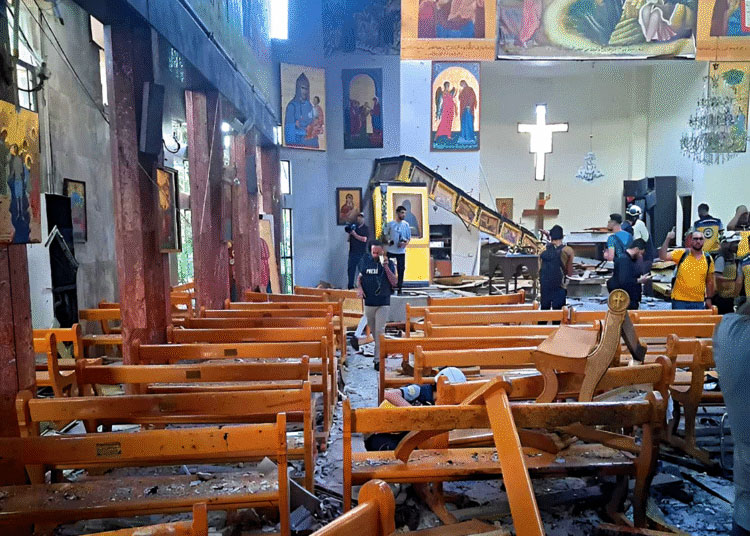
Statement
Terrorist Attack Murders Christians in Syria Washington DC – Syrian Christians USA, an organization dedicated to promoting friendly relations between the people of the United States and the people of Syria is deeply saddened to hear of the recent terrorist attack against a Christian church by ISIS in Damascus, Syria that ended in the cold blooded murder of innocents because of their faith. We believe that all Syrians, regardless of their faith, should be allowed to gather for worship without fear of being targeted. Such acts of senseless violence intended to create sectarian division among Syrians should not be allowed and must be thoroughly investigated by the current government. After too many years of war being waged by a variety of groups attempting to control the government based on their own ideologies, these types of activities must no longer be tolerated within the fabric of the Syrian people if real progress is to be made. The Syrian government needs to bring the ringleaders of this monstrous attack to justice. “Accountability for acts of terrorism, regardless of their religious affiliation, is a necessity in any incident of deliberate attack in any house of worship.,” said Mirna Barq, President of Syrian Christians USA. “This incident, if left unchecked, opens the door to more brutal attacks in not just churches but our fellow Syrians in mosques and that is utterly unacceptable,” said Barq. We pray for the souls of the needlessly murdered, and demand justice so that their lives will not have been taken in vain. It is our hope that not just Christians, but all Syrians, will someday be able to gather together to pray and worship in safety, but in the event they are targeted by any form of terrorism, that justice will be served.
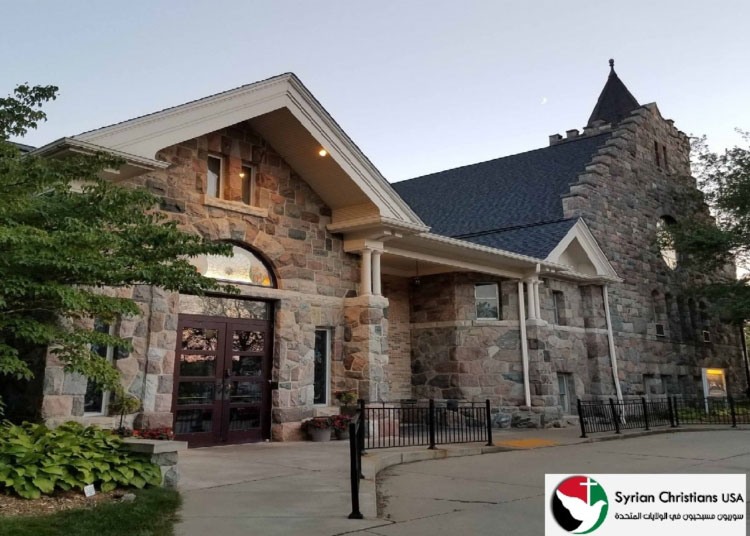
Syrian Christians USA participate in educational event on Syria at Chelsea First United Methodist Church
On Sunday, June 1, 2025, members of Syrian Christians USA were invited by Chelsea First United Methodist Church in Chelsea, Michigan, to give a public presentation on Syria as part of their Super Sunday Speaker Series. The event featured guest speaker Yasser Ashkar, Executive Director of SYRIAWISE and an active member of Syrian Christians USA. It drew attendees from the local community and members of the church congregation for an evening of testimony, reflection, and communal engagement. The lecture, titled “Between Two Flags: A Tale of Freedom, Fear, and Resistance,” offered a deeply personal and historical perspective on Syria’s struggle for freedom. Ashkar spoke candidly about growing up under the Assad regime—both father and son—sharing vivid memories from his childhood and teenage years in Aleppo. His testimony shed light on the decades-long repression faced by Syrians and the ongoing atrocities committed by the regime before and after the 2011 uprising. Ashkar‘s speech was both informative and emotional, connecting Syria’s modern tragedy to universal themes of resilience, resistance, and hope. He emphasized the importance of remembering the human stories behind the headlines and underscored the urgency of international solidarity with the Syrian people. After his talk, he offered books about Syria for those interested in further understanding the country’s history and current plight. The event also featured remarks by Mirna Barq, President of Syrian Christians USA, warmly introduced by the moderator, Laura Damschroder. In her address, Barq shared memories of her childhood in Damascus before highlighting key moments of the Syrian uprising and sharing powerful stories of courage and sacrifice. In response to questions from the audience, she reflected on the future of Syria, expressing a cautious optimism while acknowledging the many challenges ahead. Following the formal program, attendees gathered for a communal dinner, which began with a blessing from the church’s pastor. The shared meal provided an opportunity for dialogue and fellowship among participants, reinforcing the spirit of unity and compassion that defined the evening. The collaboration between Chelsea First United Methodist Church and Syrian Christians USA exemplifies the vital role of faith communities in promoting awareness, empathy, and advocacy for justice. As Syria continues to endure the consequences of dictatorship and displacement, events like this serve as meaningful reminders that the story of Syria is not forgotten—and that its people continue to seek peace and dignity.
Christians in Syria: Citizens, not a “Protected Minority”
Belonging is measured by action. Those who do not stand with their country and their people in moments of hardship lose the meaning of citizenship. I write today because the period after the fall of the Assad regime is not about managing a vacuum, but about founding a new state. Since December 8, 2024, Syria has entered a fragile transition shaped by insecurity, economic collapse, unresolved injustices, and the risk of social fragmentation. The real question is not whether Syria is diverse, it always has been, but whether this diversity will become a source of strength or a trigger for conflict. Christians in Syria are not a minority in need of protection. They are an integral part of the nation’s history, culture, and public life. For generations, they contributed to education, administration, and the formation of a shared national identity. Their presence is not conditional, nor is it a demographic footnote. “Christians in Syria are a vital part of the nation’s history, culture, and public life.” Mirna Barq Churches in Syria have never been only places of worship. They have long provided schools, healthcare, and social support, especially when the state failed or withdrew. Yet this role was never meant to replace the state, nor to justify isolation or special status. As Patriarch ” John X Yazigi ” once stated clearly: “Christians in Syria are not seeking protection… We are not leaving.” Dignity comes from equal citizenship, not from guardianship. Sectarianism in Syria was not inevitable. It was engineered by decades of authoritarian rule and regional conflicts that weaponized identity and governed through fear. The cost was immense: displacement, emigration, and the erosion of trust between communities. The dramatic decline of the Christian population reflects not privilege lost, but security and dignity denied. “Sectarianism in Syria was engineered by decades of authoritarian rule that weaponized identity” Mirna Barq The bombing of Mar Elias Church in Damascus in June 2025 was a stark reminder that civil peace is not a slogan. It is a system, one that requires accountability, justice, and a state capable of protecting all its citizens. An attack on a church left unpunished opens the door to attacks on mosques as well. Security is indivisible. Western concern for “protecting minorities” is understandable, but reducing the solution to permanent emigration empties the country of its people and capacities. Minorities should not be turned into refugee files. The real protection lies in helping Syrians remain in their homes through the rule of law, economic recovery, and functional institutions. “Minorities should not be turned into refugee files; real protection is helping Syrians stay at home.” Mirna Barq Civil peace is not a sectarian truce. It is a national contract built on the state’s monopoly over weapons, transitional justice that prevents revenge, and a minimum level of economic dignity that restores trust. To Syrians, the message is clear: